
A Blog Post by Anja Sciarra
 We debated heatedly in 2015. We witnessed waves of empathy, as well as hostile rhetoric and violence going around Europe and the globe. Pictures of a little boy washed up by the shore went around the world; and those of suffering and destruction after terrorist attacks. We read heartbreaking stories of people on the run; we heard politicians talk about a growing threat, coming from the middle East. The refugee crisis Europe is currently facing, has left the world in a state of dichotomy; the temper of people split in two. Yet, after all that talk, real solutions are still not on the table.
The Syrian civil war, the uprising of the Islamic State, and the international policies in response to that, have left the middle East in utter destabilized conditions; Forcing millions of people to leave their home countries in hopes of a safer life. As an aftermath, Europe now faces the biggest influx of refugees since World War II.
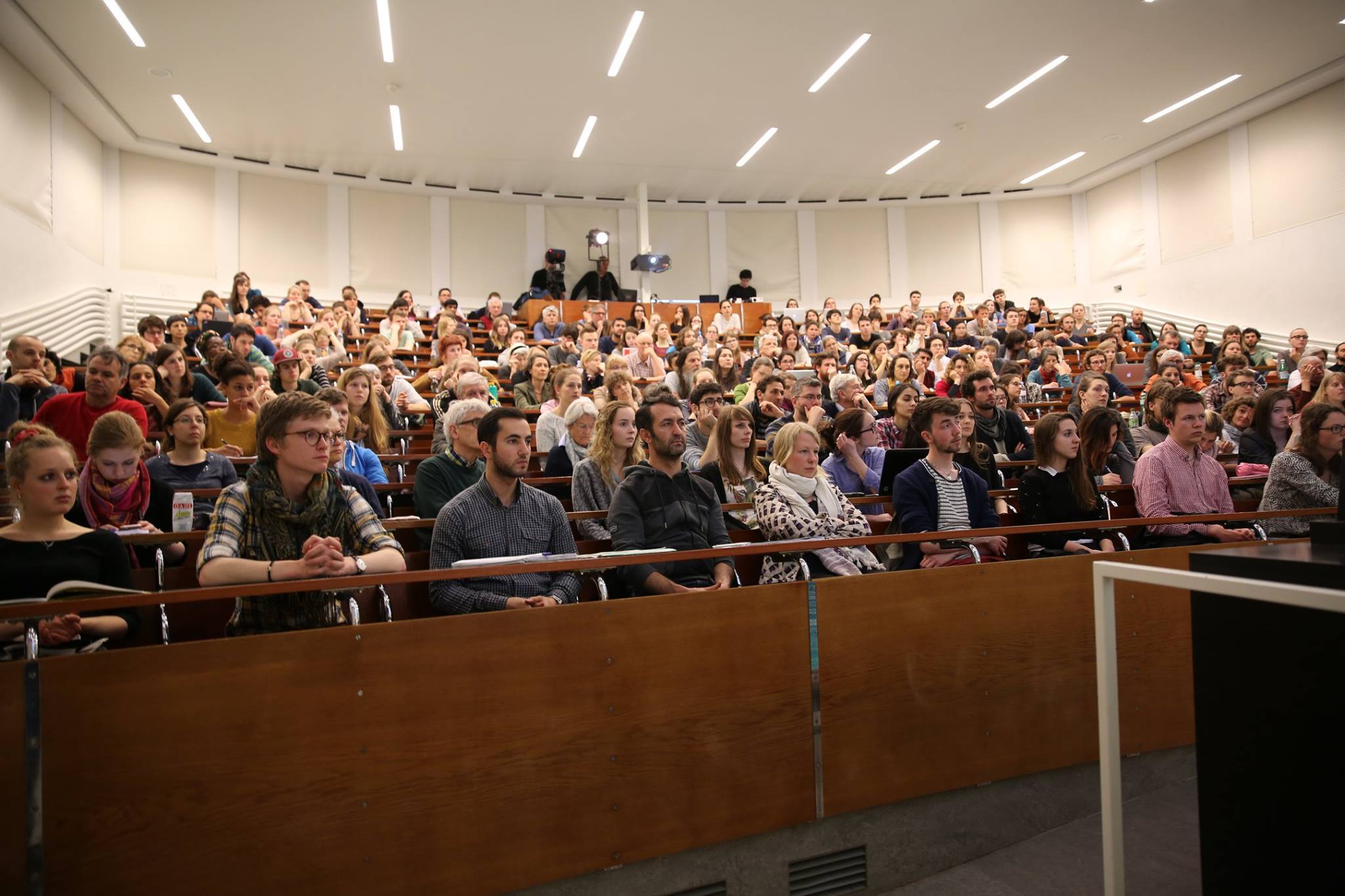
Senay Özden is an expert when it comes to Syrian refugees and has worked in Turkey many years to do research on the matter.In her public talk at the University of Basel, she talked mostly about whether Turkey is a safe ‚third country‘, and the deal struck between the European Union and Turkey. She also went into depth about the conditions Syrian refugees, that live in Turkey right now, have to endure; whether it’s concerning the refugee camps, work permits, or education for the children. A big theme was also the political climate that Turkish citizens often get conveyed from the media.
Özdens public talk couldn’t have had better timing, as, just a day before, we’ve seen the deal between the EU and Turkey come into effect for the first time. This deal requires Turkey to take in refugees that have crossed into Greece irregularly. For every refugee sent back to Turkey, a Syrian refugee would be resettled from there to Europe.
Turkey currently hosts 2.7 million Syrian refugees, as well as tens of thousands from other nations. This is due to their ‚open-door policy‘, where migrants are free to cross the Turkish border. However, this policy does not give the migrants refugee status. Instead, they are considered to be ‚guests‘, and their stay is assumed to be temporary. With such conditions, refugees have no guarantee that they won’t be shipped back to their home countries, should the Turkish government deem that they have overstayed their welcome. This directly contradicts with the Geneva Refugee Convention, which is a requirement of the EU to render a country as safe for refugees. Despite heavy criticism, the European Union has struck the deal with Turkey.
In her lecture, Özden reminds us that bizarre short-term policies such as this, won’t be sufficient in handling the crisis, and stresses that long-term solutions have to be found. The problem must be grabbed by its roots; in Syria. She is certainly right in this assertion, however, the current anti-refugee climate in Europe makes the search for diplomatic and constructive solutions an uphill battle.
 So what can we do? First and foremost the animosity towards migrants has to stop! We cannot let the fearmongering of right-wing politicians dictate our policies. If we keep letting that happen, the most powerless people in this situation (the refugees) will continue to be marginalized further. Only when Europe stops portraying refugees as the enemies, and dangerous criminals, can we start looking for permanent and sustainable resolutions that will stabilize Syria and the middle East.